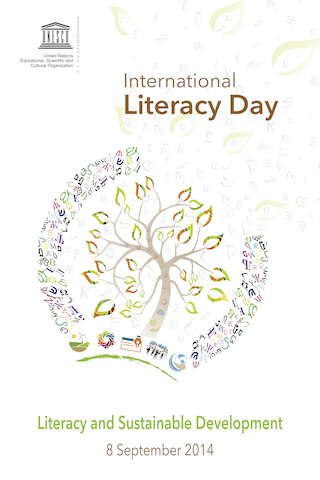
International Literacy Day 2014

ILD 2014 Poster(Updated Below)

Today is International Literacy Day, an annual observance aimed at focusing attention on the importance of literacy around the world. There are events in schools and communities around the globe today to mark the occasion, including a United Nations conference in Dhaka, Bangladesh.

The theme of International Literacy Day 2014 (ILD 2014) is “Literacy and Sustainable Development.” According to UNESCO, “[l]iteracy is one of the key elements needed to promote sustainable development, as it empowers people so that they can make the right decisions in the areas of economic growth, social development and environmental integration.”

This UNESCO page has links to some of the more prominent ILD 2014 events. Here are a couple of other interesting ILD 2014-related announcements and news items that have come across my desk this morning:

  • In the U.K., the House of Commons Business, Innovation and Skills Select Committee has published a report examining the impact of illiteracy and innumeracy in England, calling on the government to launch a national campaign to address the issue, which they say is undermining the UK’s economic performance.
  • At an ILD 2014 event in India, President Pranab Mukherjee called for the “complete eradication” of illiteracy from the country, with a particular focus on improving literacy rates among the most disadvantaged sections of Indian society.
  • The Philippine Daily Inquirer has marked the day with an interesting story about a woman in the Philippines who made a decision to re-engage with education after being belittled by her employer.

A few interesting opinion pieces:

  • Lifelong Learning for Literacy and Sustainable Development – Worrel Hibbert, Executive Director of the Jamaican Foundation for Lifelong Learning, writes about Jamaica’s implementation of a new High School Diploma Equivalency (HSDE) programme for adult learners. (More from Jamaica here.)
  • How Adult Literacy Is Transforming a Village – Craig and Marc Kielburger, co-founders of the international charity, Free The Children, write about an adult literacy class in the south-central China village of Waer, where residents are still recovering from the 2008 Sichuan earthquake.
  • An editorial from the Gaston Gazette (North Carolina) argues that “before job-ready education can begin, a student and prospective worker must be able to read.”

International Literacy Day celebrations are generally more prominent outside of the Unites States, although many adult literacy programs mark the day with events or announcements. For example, in New York, LiteracyCNY has posted a 52-year retrospective of their work in the community.

Finally, those of you who are fans of infographics, here is the official UNESCO ILD 2014 infographic (click on it to see the entire thing):
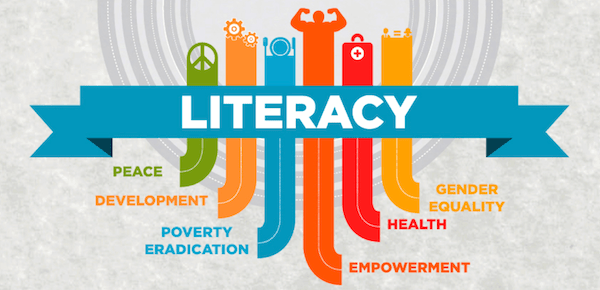
Link to ILD 2014 Inforgraphic

This is just a teaser—there will be hundreds of events and surely more news about ILD 2014 as the day progresses. I don’t have time to track it all, but I encourage you poke around the inter webs today and see what else is out there. Find anything interesting? Want to promote an event in your community? Feel free to post it in the comments.

UPDATE 9/8/14 2:30 PM: Had some time during my lunch break to poke around for some additional stories. Here is the best of what I found:

Some additional opinion pieces:

Invitation to Comment on Implementation of Title II of WIOA

(Updated Below)

The U.S. Department of Education’s Office of Career, Technical, and Adult Education (OCTAE) is providing the public with an opportunity to kvetch and complain —I mean, submit comments and recommendations—regarding the implementation of the new Workforce Innovation and Opportunity Act (WIOA), signed by President Obama in July. Specifically, the new version of the Adult Education and Family Literacy Act (AEFLA) in Title II.

According to OCTAE, “your input can help us identify issues and concerns that we need to address in order to fulfill the expectations of WIOA, particularly as we develop draft regulations for public comment.” They’ve listed a few specific issues they are interested in hearing about, but you can comment on anything you like. In fact, I usually think it’s best not to necessarily let OCTAE be the one to frame the discussion about their activities.

It is a pretty good list, though:

  1. In issuing definitions of performance indicators under Section 116, what should be considered in regulation or guidance when applying these indicators to adult education participants? How can the use of “measurable skill gain” best support services to low-skilled and limited English proficient individuals?
  2. WIOA emphasizes the importance of connecting job seekers and workers with the needs of employers and the regional economy. States will be required to report on their effectiveness in serving employers. What factors should OCTAE consider when defining how adult education and literacy programs may effectively serve employers?
  3. WIOA requires states to implement adult education content standards that are aligned to their standards under Title I of the Elementary and Secondary Education Act of 1965. What are the timeline and implementation issues that should be considered in supporting this requirement?
  4. AEFLA adds new activities to adult education and literacy services, including integrated education and training and workforce preparation. What should be considered in regulation or guidance on these new activities?

Someone representing local programs asked me earlier today if I thought it was worth their while to submit comments now, or to wait to respond to the draft regulations. I think it’s definitely worth submitting comments now. Comments on the draft regulations will also be important, but just like with legislation, it’s best to let drafters know what your biggest questions/concerns are *before* anything is drafted. It’s been my experience that the further you are along a bureaucratic process, the harder it is to change things. Once drafted, whatever is in those regulations will likely set the parameters of the discussion/debate more narrowly—it may be harder, for example, to add something that’s missing at that stage.

Another way to think of it is this: if folks at the local level don’t submit comments, then we are all relying on the comments submitted by the big national policy shops—who surely will be weighing in heavily on this. While I’m not suggesting that they won’t necessarily submit good recommendations, those groups typically don’t have to worry about actually implementing any of their proposals. It’s the folks on the ground who are going to have to live with the policies and regulations that are produced. So I’d strongly encourage local folks to get into the discussion early and often.

Not a ton of time though: comments are due by Friday, August 29th – roughly between the time almost everyone is on vacation and when they come back.

Again, here is the link to the invitation:

Invitation to Comment on Implementation of Title II and Title IV of the Workforce Innovation and Opportunity Act | Office of Career, Technical, and Adult Education.

UPDATE 8/13/14 2:30pm: Added the due date. Made title shorter.

WIA/WIOA Update

I generally don’t have the time or inclination to post updates on legislative action with any kind of consistency—choosing instead to pick and choose, looking for spots where I think I might have a unique and/or possibly even interesting take on something. Presumably, loyal readers of this site have other, more reliable sources for regular legislative updates. But since I’ve written a lot about the reauthorization of the Workforce Investment Act (now retitled, with more modern-sounding buzzwords, as the Workforce Innovation and Opportunity Act, or WIOA)—most recently here—I thought I should mention that the WIOA bill which passed the Senate last month is scheduled for a vote in the House on Wednesday or Thursday of this week. The House is considering WIOA under a fast-track process known as suspension of the rules: no more than 40 minutes of debate, and no amendments will be offered. However, two-thirds of members will have to vote for the bill for it to pass.

This is not that unusual a move—it usually means that the House leadership is confident that the bill has the votes and time for lengthy debate/opportunity for amendment is not needed.

In talking with people in the adult education field, I’ve found that the level of interest/knowledge/excitement over WIOA tends to be lower than it is among policy people in Washington, D.C. I’d be interested to hear what folks on the ground in adult education (teachers, program directors, students) think the new bill will do for them.

A Good Trend

(Updated Below)

This is a great idea:

The John S. and James L. Knight Foundation will award $900,000 to public library systems in New York City and Chicago, part of a larger pool of innovation grants worth nearly $3.5 million, to allow disadvantaged families and individuals to borrow portable Wi-Fi hotspots and take them home. (my emphasis)

The New York City Public Library’s pilot project will allow families to borrow mobile Wi-Fi hotspot devices for up to a year, with the goal of reaching 10,000 households. The program, which will receive $500,000 and will be run in the library’s 92 branches, is targeting users whose current access to the Internet is limited to 40 minutes a day.

The Chicago program, which will receive $400,000, has a much smaller window for borrowing—devices will be available for three-week loans, though the goal is to hone the loaning model and expand it over time. The Chicago program will also make laptops and tablets available, the Knight foundation said.

In both cases, the loaning of equipment will be coupled with training meant to increase borrowers’ overall digital literacy and Internet skill.

While the impetus for this initiative was to support families of K-12 students, note that borrowers may also be individuals. Thus adult learners who lack access to the Internet at home could benefit from this program as well — and it would be relatively easy in both cities to partner up with the adult education community to ensure that the digital literacy training offered is accessible to adults with low literacy.

Public libraries, by design, they are there to support learning and access to information for everyone in the communities they serve. Initiatives that look to public libraries as the focal point for community internet access is a good trend for adult education.

UPDATE 6/30/14: Another story about this initiative here.